
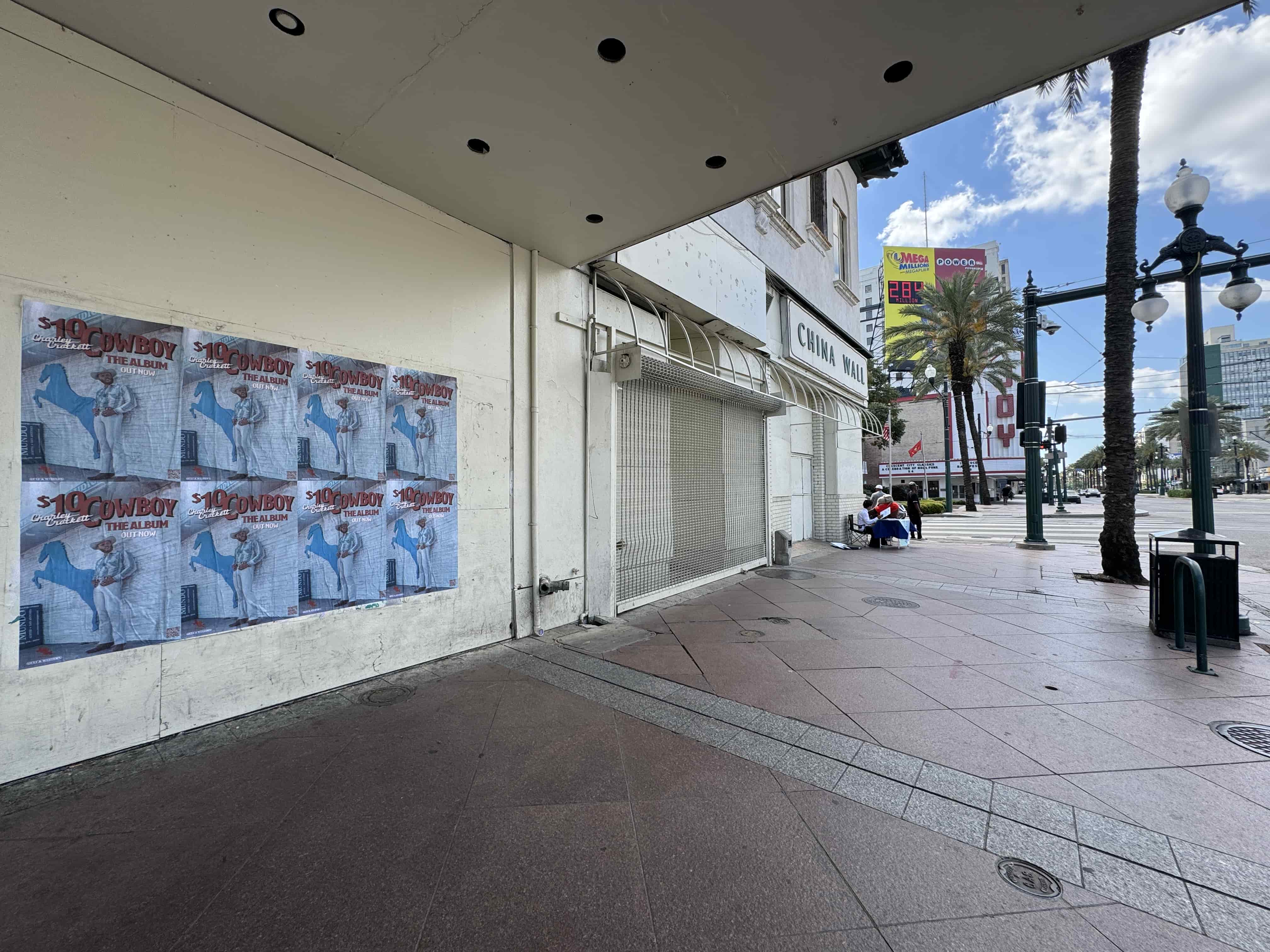
Planning a wild posting campaign isn't complicated, but there are decisions at each stage that directly affect your results. This is the process we use across 50+ US markets, refined over hundreds of campaigns. Whether you're running your first street advertising campaign or your fiftieth, this is how to get it right.
Step 1: Define Your Objective
Before anything else, get clear on what the campaign needs to accomplish. Wild posting serves different objectives depending on how it's deployed:
Brand awareness — saturation campaigns across multiple neighborhoods. High poster count, standard format, maximum density. The goal is repeated exposure over 2-4 weeks.
Event promotion — time-sensitive campaigns that launch 1-2 weeks before the event. Often paired with stencils for sidewalk-level reinforcement near the venue.
Product launch — high-impact campaigns using jumbo format in premium corridors. Fewer placements but each one commands attention.
Cultural positioning — getting your brand into the visual landscape of specific neighborhoods where your target audience lives and works. Less about reach, more about context.
Your objective determines everything downstream: format, neighborhoods, duration, and budget.
Step 2: Choose Your Markets
Where you post matters more than how many posters you put up. A focused campaign in one market outperforms a scattered campaign across five. Start with the city where your target audience is most concentrated and expand from there.
Key factors for market selection: foot traffic density in target neighborhoods, audience alignment with your brand, and whether you have other marketing activity in that market to amplify the campaign. Wild posting works best when it's part of a larger moment — a product drop, a tour announcement, a retail launch.

Step 3: Select Your Format
Standard 24x36 posters are the workhorse. High density, cost-effective, and effective for campaigns where repetition drives the message home. Use when you want your audience to see the poster multiple times on their daily route.
Jumbo 48x72 posters are four times the size and dominate any wall they're on. Use for tentpole moments where visual impact matters more than quantity. Album covers, movie posters, and fashion campaigns are where jumbo shines.
Stencils put your message directly on the sidewalk. Highly effective for driving foot traffic to a specific location — "3 blocks this way" type activations.
Decals work on surfaces where paper can't go. Durable, weather-resistant, and effective for extending a campaign's reach into non-traditional surfaces.
24x36 Standard Format
Step 4: Prepare Your Creative
Your poster design needs to work at street level, which means different rules than digital or print advertising:
Readability at distance. If someone can't read your headline from 15 feet away, the type is too small. Wild posting isn't a magazine ad — it needs to communicate instantly to people walking past.
Bold visuals over dense copy. The best performing posters we see have a strong image, a short headline, and a clear call to action (URL, QR code, or social handle). That's it. Resist the urge to fill the space with information.
Multiple executions. Running 2-3 different poster designs in the same campaign creates visual variety and prevents the audience from tuning out a single repeated image. It also lets you test which creative resonates most.
We accept print-ready files in standard formats and handle all printing through our vendor network. Files received by end of day typically ship to crews within 24-48 hours.
Step 5: Installation
This is where the campaign comes to life. Our local install crews in each market handle all placement, working during optimal hours for each neighborhood (early morning for commercial corridors, evening for nightlife districts).
Standard turnaround from receiving print-ready creative to posters on walls is 72 hours. For multi-market campaigns, we coordinate simultaneous launches so your brand appears across all target cities within the same window.
Crews install with the density and placement strategy we've mapped for your campaign. Every location is selected for visibility, foot traffic, and audience relevance — not just whatever wall is available.
Step 6: Documentation
This is where most companies fall short and where we don't. Every single placement is photographed and documented with GPS coordinates and timestamps. The deliverable is a full campaign gallery with hi-res geotagged photos and an interactive pin map showing every location.
Documentation is delivered within 48 hours of installation. No exceptions. You shouldn't have to chase your vendor for proof that the campaign went up.
Step 7: Measure and Extend
Wild posting doesn't come with click-through rates, but that doesn't mean it's unmeasurable. Ways to track impact:
QR code scans and custom URLs — include a campaign-specific landing page or QR code and track traffic directly.
Social mentions and UGC — street-level campaigns generate organic social sharing. Monitor your brand mentions and hashtags during and after the campaign window.
Foot traffic to physical locations — if the campaign is driving people to a store, event, or pop-up, compare foot traffic data before and during the campaign.
Brand lift surveys — for larger campaigns, pre/post brand awareness surveys in the target market quantify the impact directly.
Most campaigns run 2-4 weeks. If the campaign is performing well, extending with a refresh install (new posters on the same walls) keeps the presence alive without starting from scratch.
Ready to Plan Your Campaign?
Tell us your markets, timeline, format, and objectives. We'll come back with a custom plan and quote within 24 hours. No sales decks, no runaround — just a clear plan with real numbers.